

Angelo Mangiarotti
1921 - 2012
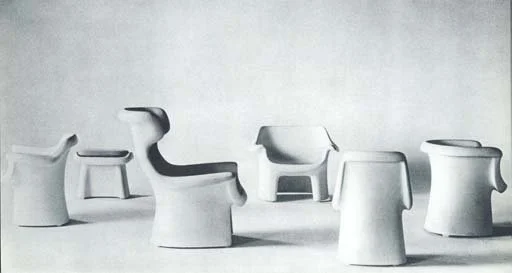
Armchairs for Cassina (1965): Armchairs of various heights and sizes, in which Mangiarotti studies, and especially experiments, the molding of expanded polyurethane.
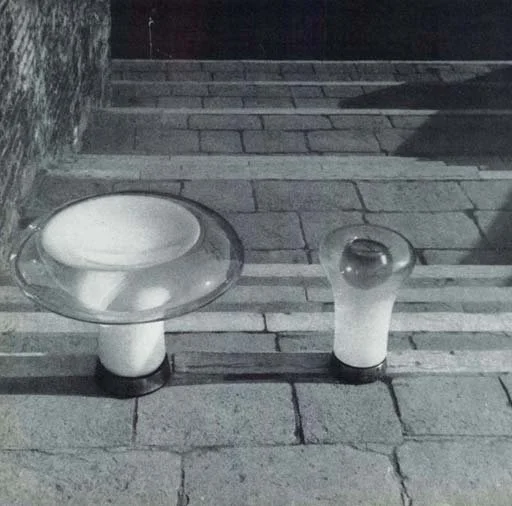
Saffo and Lesbo lamps for Artemide (1967): The two lamps are made of blown glass, shaded, whose plastically soft shape rests on a small cylindrical metal base.

Angelo Mangiarotti
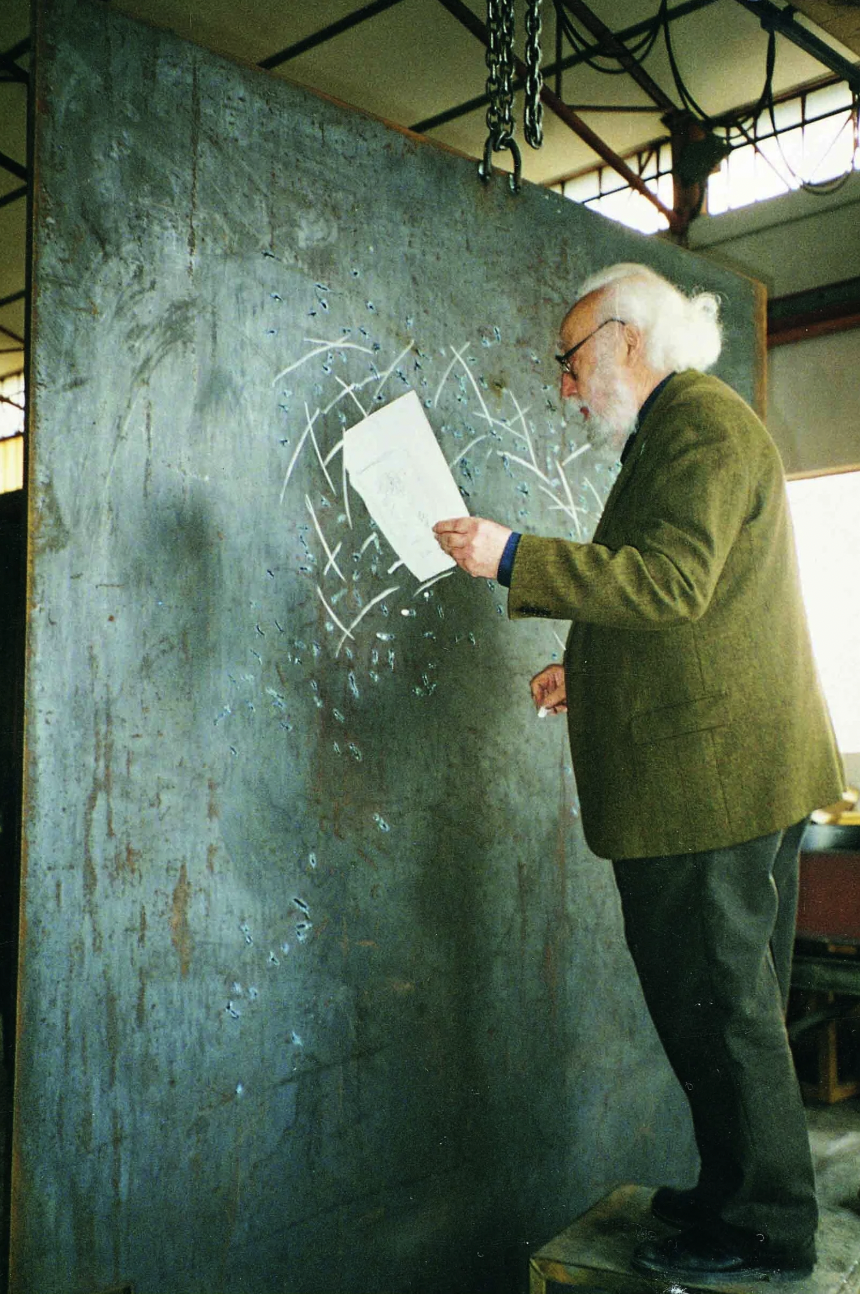
Angelo Mangiarotti is known as both an unorthodox designer and an artist driven by deep conceptual attachment to his works. Graduating from Polytechnic University of Milan in 1948, he left post-war Italy for the US. There he worked alongside Frank Lloyd Wright, Walter Gropius, Mies van der Rohe and Konrad Wachsmann - and was exposed to the organic architecture popular at the time. The movement focussed on a design that was in harmony with its natural environment, preferencing raw materials and organic shapes. This period was particularly influential for Mangiarotti, who returned to Milan in 1955 to open his own design firm with Bruno Morassutti.
Mangiarotti believed in making objects that “last longer than us”, to that end espousing “simple principles, elementary concepts and primary materials”. The fundamental starting point of any object was its usefulness, he said, but there were many more strands at play than mere function. From there, The hidden quality of his product design was to favour a single headline material – alabaster, wood, marble, glass. This materiality, the shape, and above all the process, was a conceptual way of thinking heapplied to any or all projects irrespective of size or purpose.
For Mangiarotti architecture and furniture design were differentiated only in scale and material, and he applied the same methodological approach whether he was designing a residential building or a vase, a water tank or glass, a stadium or a storage unit. If a building by him were reduced in scale to a size that would fit on top of a desk, it would become not an architectural model, but an industrial design. A sketch of the entrance to the Armitalia compound in Cinisello Balsamo from 1968, could be a working drawing of the Lari lamp, produced ten years later. Similarly, his 1961 fifty metre high water tower took the form of a truncated cone or mushroom - a shape echoed in the Saffo and Lesbo lamps designed in 1967 for Artemide.
Through conceptual rigour and a deep understanding of materials, Angelo Mangiarotti designed sculptural lamps informed by architecture and art. A perfect example of this is his 1967 Lesbo lamp. Designed to evoke the ‘architecture of water” with its droplet shape and soft Murano glass, his conceptual fascination with mythology honours the ancient Greek poetess Sappho who lived on the island of Lesbos. The Lesbo lamp is a perfect example of Mangiarotti’s conceptual rigour and intensity of his design practice – covering the widest themes, technologies and materials.
KEY DESIGNS:
Cavalletto bookcase 1953
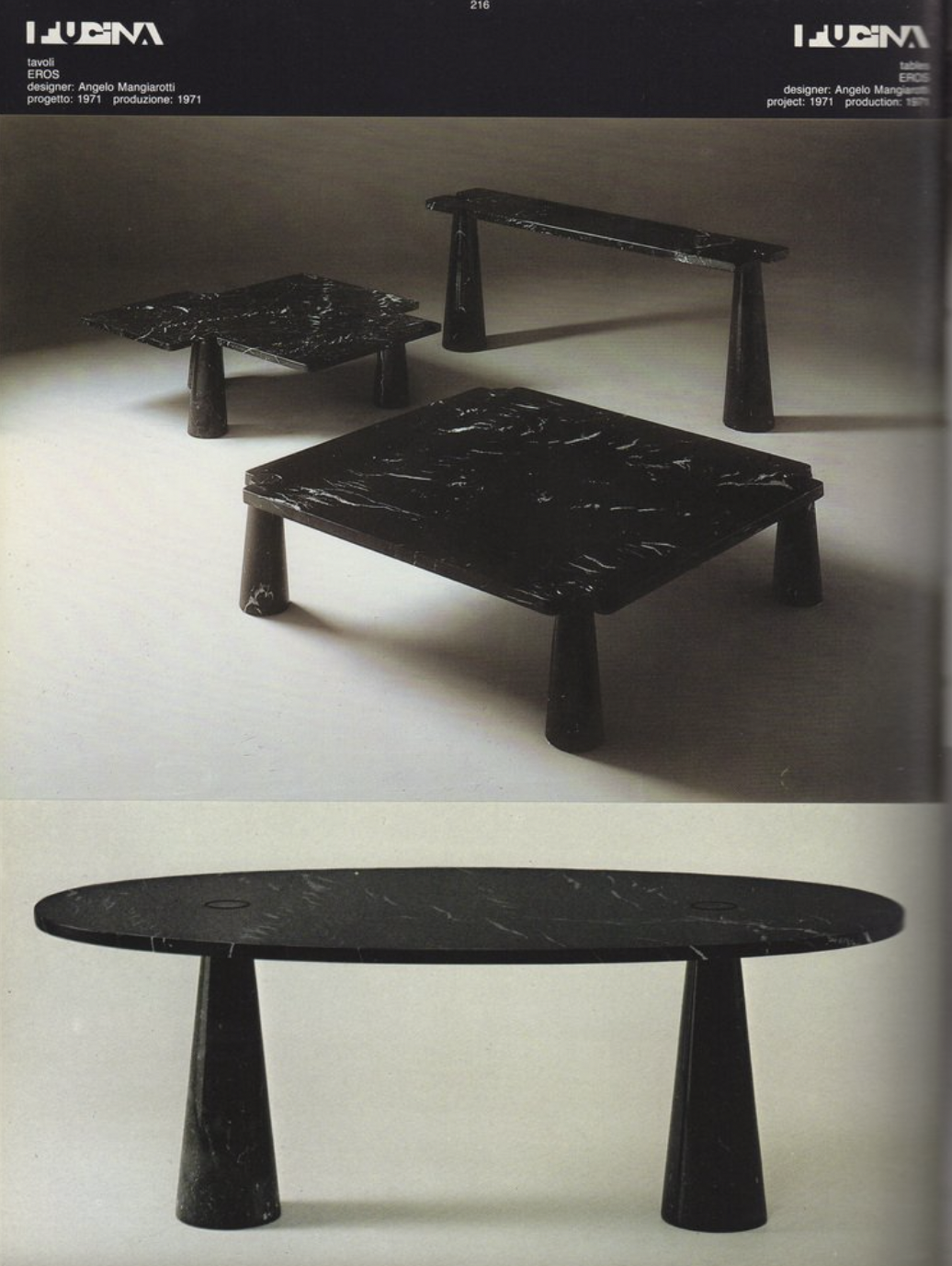
Eros table series 1971
Cruscotto modular kitchen system 1974
Tre 3 chair 1978
Incas table series 1978
Eccentrico table 1979
Asolo table 1981
Saffo lamp 1967
Lesbo lamp 1967
Giogali chandelier system 1967
Cnosso ceiling lamp 1969
Lari table lamp 1978
COLLABORATIONS:
Bruno Morassutti: Mangiarotti formed a significant architectural and design studio in Milan with Morassutti in 1955, a partnership that lasted until 1960. Together, they worked on numerous projects, including the Mater Misericordiae Church in Baranzate, the Three-Cylinder House in Milan, and the Cavalletto bookcase.
Aldo Favini: He collaborated with Favini, a structural engineer, on the structural aspects of some architectural projects, such as the deposit for ferrous materials in Padua.
Other influential figures: During a visiting professorship at the Illinois Institute of Technology in Chicago in the early 1950s, Mangiarotti met and exchanged ideas with prominent architects such as Frank Lloyd Wright, Walter Gropius, Mies van der Rohe, and Konrad Wachsmann.
Carlo Scarpa: Mangiarotti's work, particularly the Tre 3 chair, showed an influence from the attention to detail characteristic of Carlo Scarpa.
Studio Ottavio Di Blasi & Partners: More recently, Studio Ottavio Di Blasi & Partners has been involved in the installation design for retrospectives of Mangiarotti's work and in the design of specific elements for these exhibitions in collaboration with UniFor