

GIANCARLO PIRETTI
1940 - 2023

GIANCARLO PIRETTI
Giancarlo Piretti began his design practice in the early 1960s. It was a time marked by a seismic shift in furniture design – one of rebellion, experimentation and social transformation. The era rejected the refined sophistication of earlier modernism and instead celebrated popular culture, mass production, and the democratic potential of good design. Embracing synthetic materials– furniture reflected the optimism of technological advances – underpinned by widespread economic boom and the optimism of the space race.
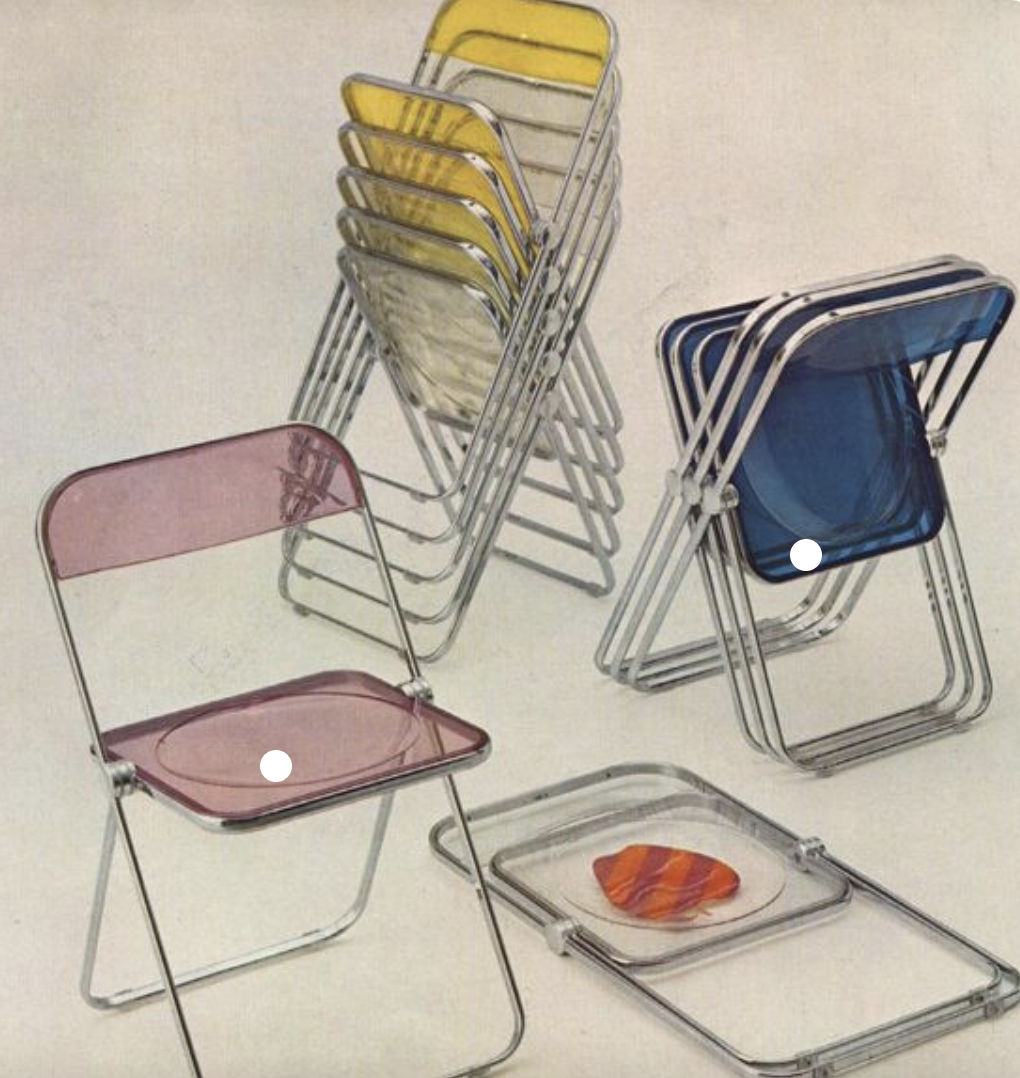
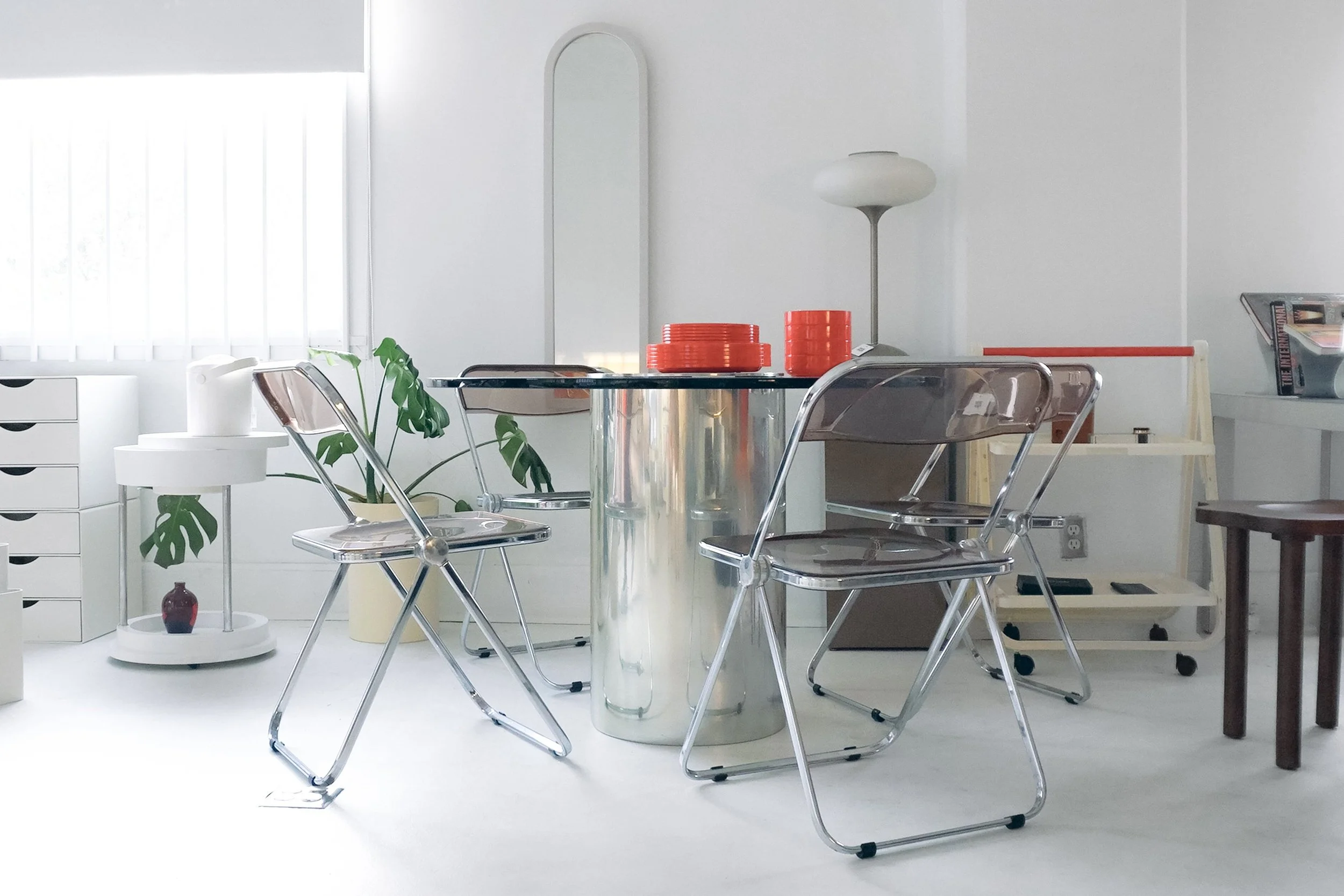
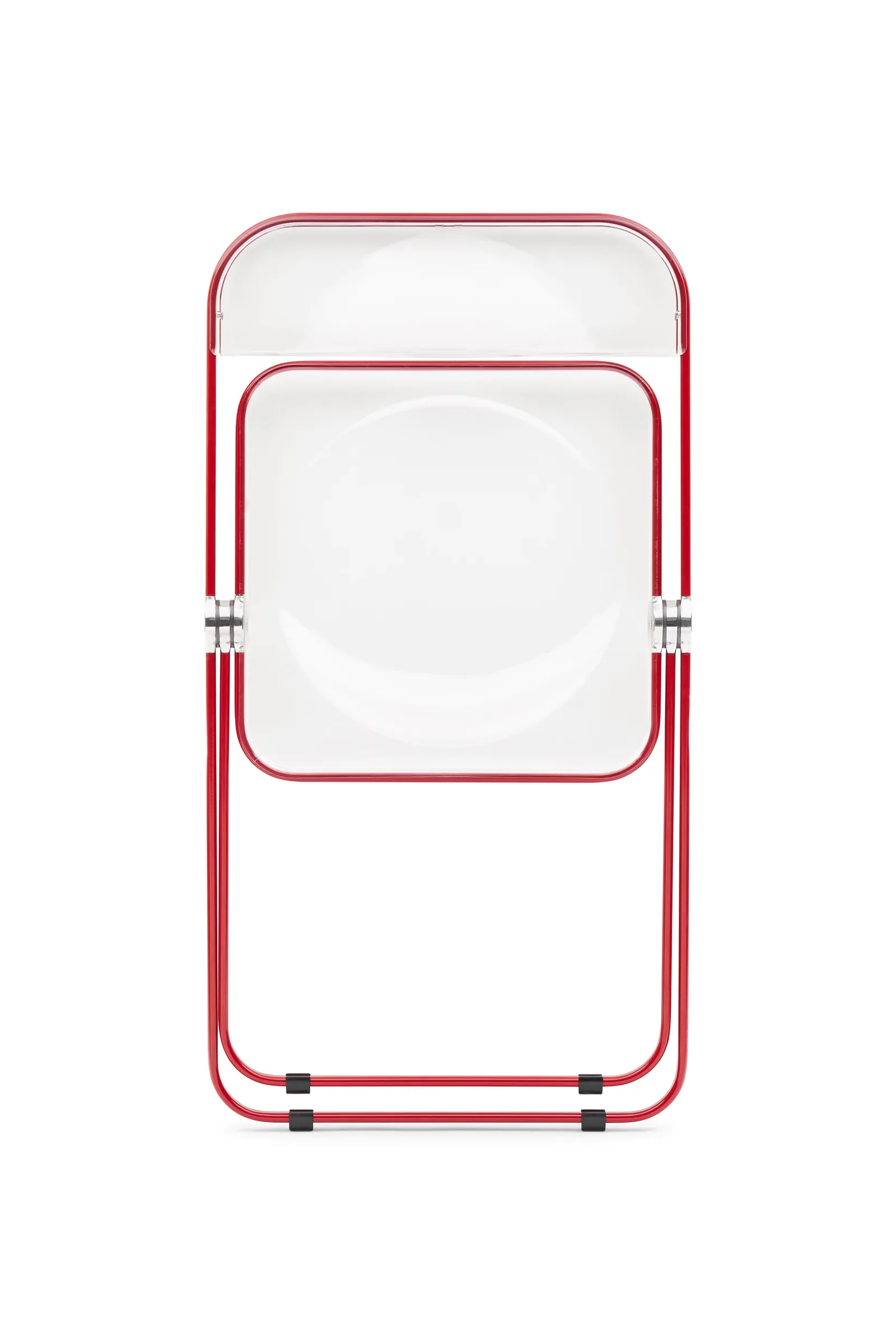
Riding the wave of this post‑war design relevance, Giancarlo Piretti presented his most famous work - the Plia chair for Anonima Castelli. Arriving in a bustling design ecosystem alongside Bertoia’s wire chairs, Magistretti’s Carimate wicker lounge chair, and Sottsass’s Memphis‑era experiments; the Plia’s language was completely its own. Transparent, functional, geometric and foldable– it encapsulated the attitude of time – made to serve structural and functional purposes rather than any overt decorative appeal.
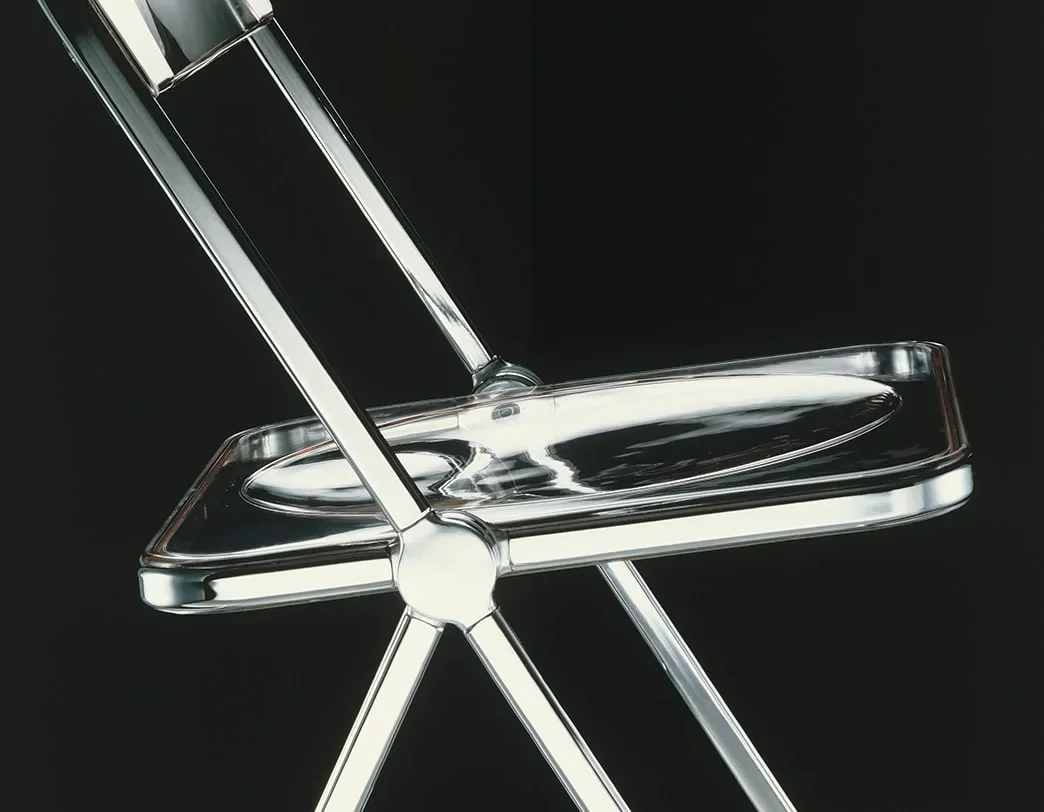
To create the Plia Giancarlo Piretti harnessed the latest technology. By employing fibreglass formally used to make sunglasses, he managed to create reinforced plastic that was both strong and lightweight. In terms of the Plias desired use, it was not intended to be a fixed chair around the table – rather a chair that you collect from another other room when needed. By using thin metal tubes and clear plastic - it is visually light and resists being intrusive or aesthetically demanding.
The Plia’s popularity was instantaneous – with the famous Italian fashion designer Mila Schön ordering thousands at first sight at the 1967 Milan Furniture Fair. Only three years after its release, the Plia was featued MoMA’s 1970s Radical Furniture exhibition – further cementing it as an instant design classic. In the spirit of democratic design, Castelli’s reduced the price of the chair with the intentions of diminishing the elitist conventions of the design world, and instead embraced the widespread “pop market culture.” Adopting this philosophy was a bold move for the company, but it ultimately paid off - as the Plia became one of Castelli’s most profitable designs to date. Between 1969 and 2022, Castelli has sold around six million Plia chairs.
Over half a century later, Giancarlo Piretti’s design continues to offer a perfect harmony of form and function, making it an enduring reference point in the history of Italian modern furniture and a genuine time‑proof design.
KEY DESIGNS:
Plia folding chair: A highly successful, lightweight, and foldable chair that has sold millions and is part of museum collections worldwide.
Alky lounge chair: A sculptural chair with a unique design that appears to float above the ground.
DSC 106 (or Axis) seating system: A series of stacking chairs.
Platone folding desk: A folding desk that received a Gold Medal from the IBD.
System 61 modular sofa: A modular sofa system.
Xylon chair: A wooden chair that won two G Mark Awards.
Torsion Seating Collection: An award-winning collection of institutional chairs.
Planto coat rack: A folding coat rack.
Pluvium umbrella stand: An umbrella stand for Castelli.
More designs
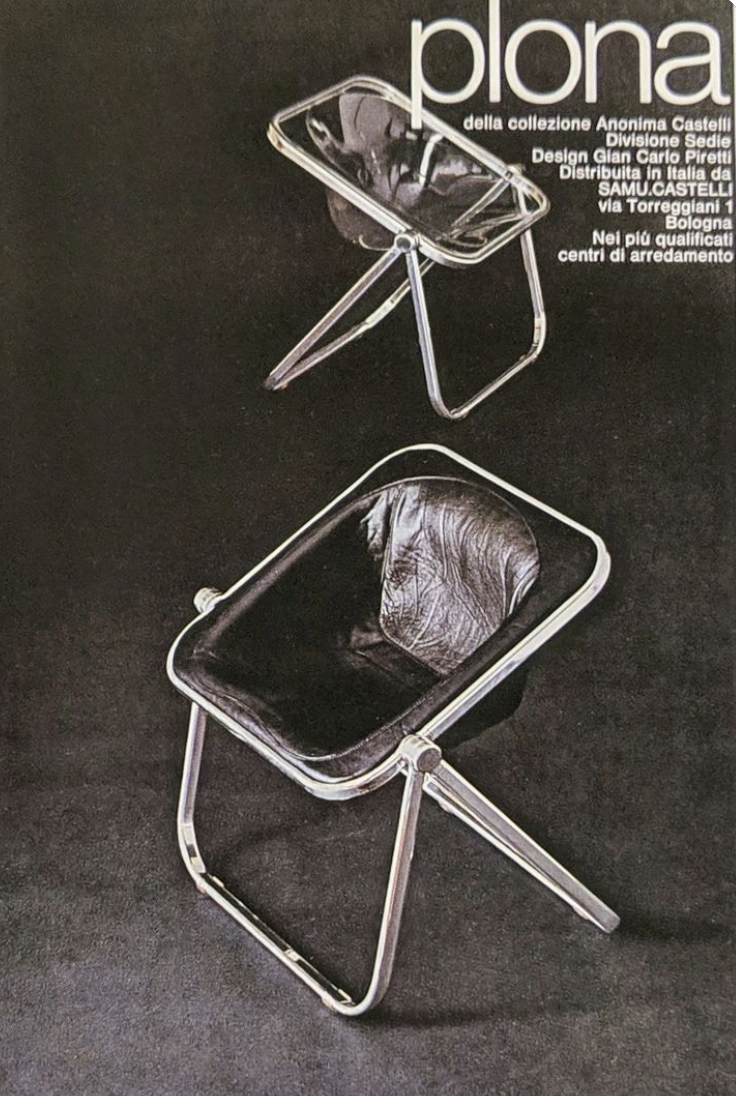
Plona lounge chair: A lounge chair designed in the 1960s.
Plia with Vienna straw: A variation of the Plia chair with a straw seat.
Vertebra chair: A chair system for which he won a Compasso d'Oro award.
Piretti Collection: A larger project of office and institutional seating systems.
Engage & Impulse: Office chair lines featuring a synchro tilt mechanism.
#18000 nesting & stacking chairs: A line of nesting and stacking chairs.
Strive chair collection: A collection of chairs for KI Furniture.
Pirouette nesting table: A nesting table also for KI Furniture.
COLLABORATIONS:
Anonima Castelli / Castelli: Piretti designed many of his most famous works for this company, including the Plia folding chair, Alky armchair, and Plona lounge chair.
Castilia: Piretti worked for this firm, a subsidiary of the Castelli group, from 1984 to 1986. He later presented the Piretti Collection office seating system for them.
Emilio Ambasz: The Argentine architect-designer collaborated with Piretti in the late 1970s on the award-winning Vertebra and Dorsal ergonomic seating systems.
Emilio Ambasz: The Argentine architect-designer collaborated with Piretti in the late 1970s on the award-winning Vertebra and Dorsal ergonomic seating systems.
KI Furniture: Piretti designed several collections for this American company, including the Pirouette, Strive, Torsion, Doni, and Grazie seating lines.
FURTHER READING:
https://mcsprogram.org/browse/u53H2B/246980/1968_italian_radical-design.pdf
https://architecture-history.org/books/Italy,%20The%20New%20Domestic%20Landscape.pdf